

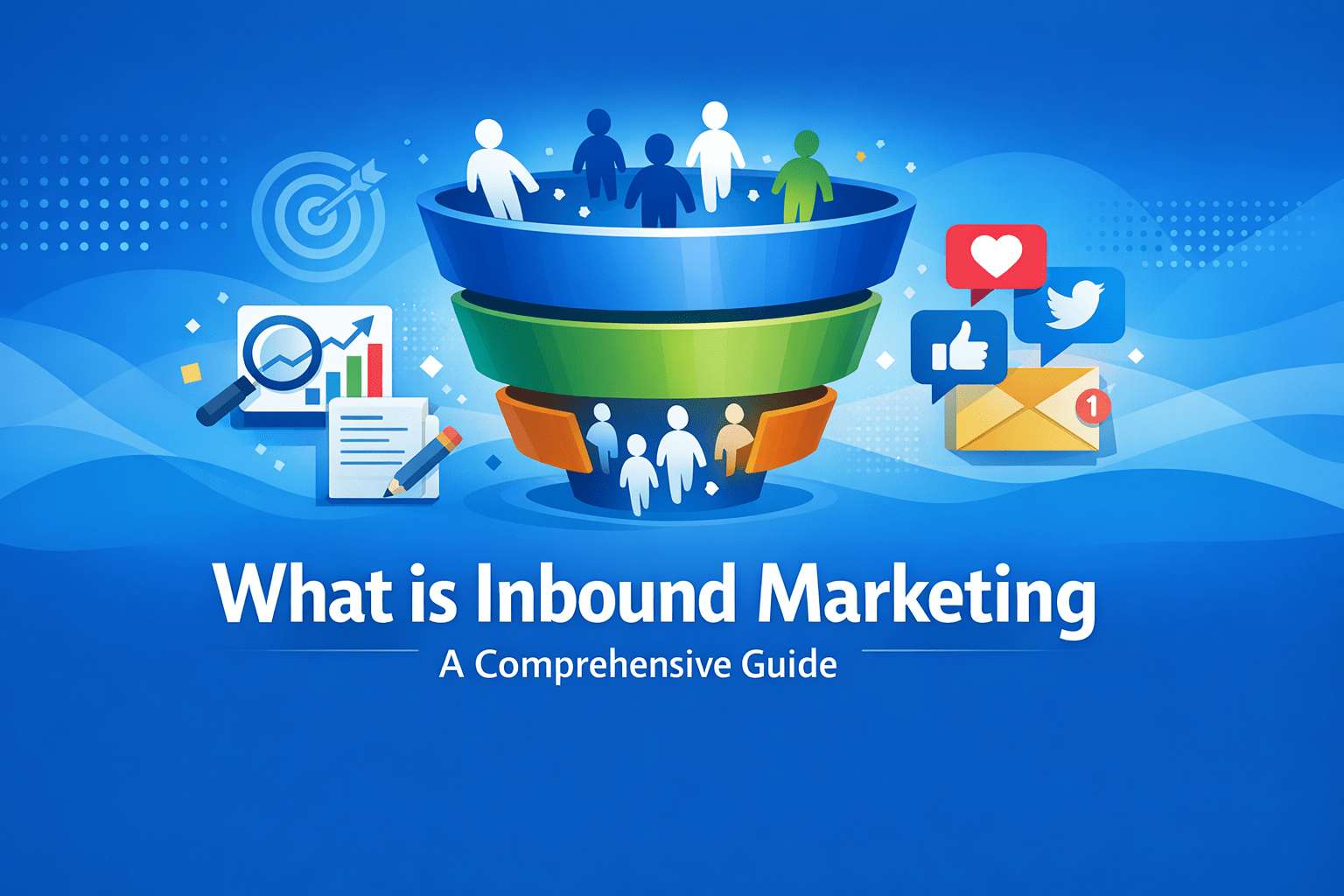

What is Inbound Marketing? A Comprehensive Guide
What is Inbound Marketing? A Comprehensive Guide
People rarely wake up hoping to be sold to. They do, however, wake up with questions. “How do I choose the right accounting software?” “What’s the safest way to waterproof a deck?” “Which provider can help my team work faster?”
Inbound marketing is the discipline of meeting that moment with useful, relevant information, then earning the right to continue the conversation. It is marketing built on permission, not interruption, and it rewards organisations that are willing to teach, guide, and prove their value over time.
Inbound marketing, in plain terms
Inbound marketing is a “pull” approach: you attract people by publishing content and experiences that help them solve a problem or make a better decision. They find you via search, social, referrals, or a forwarded email. They opt in because what you’ve shared is genuinely helpful.
That opt-in matters. When someone chooses to read your guide, watch your video, or subscribe to your newsletter, they’re signalling intent and trust. Inbound turns those signals into a structured pathway: from anonymous visitor to qualified lead to customer, with a relationship that can keep growing well after the first purchase.
A good way to summarise inbound is simple: you earn attention by being useful, consistently.
Inbound vs outbound: the practical difference
Outbound marketing is the “push” side of the spectrum. It places a message in front of people whether they asked for it or not, often through paid media or direct outreach. Sometimes that’s appropriate. If you’re launching a new product line or promoting a limited-time event, outbound can create quick reach.
Inbound is different in both tone and timing. It shows up when the buyer is already researching and wants clarity. It also tends to compound: a strong article or video can keep attracting the right people for months, even years, with ongoing maintenance rather than constant spend.
Here’s a simple comparison.
| Attribute | Inbound marketing | Outbound marketing |
|---|---|---|
| Core idea | Earn attention with valuable content | Buy attention with paid placement or outreach |
| Audience posture | Opt-in, self-directed | Interrupted, often passive |
| Typical channels | SEO, blogs, webinars, email nurturing, organic social | TV/radio, billboards, print, cold outreach, broad paid ads |
| Speed | Slower to ramp, then builds momentum | Fast start, ends when spend or activity stops |
| Best at | Building trust, lowering cost per lead over time | Creating immediate awareness and short-term pipeline |
Many high-performing teams don’t treat this as an either-or decision. They build an inbound foundation, then use selective outbound to support specific targets, markets, or time-bound offers.
The inbound “flywheel”: attract, engage, delight
Inbound works best as a system rather than a set of disconnected tactics. One helpful model is to think in three phases: attract, engage, and delight.
Attract is about being findable and compelling: content that answers real questions, pages that load quickly, a clear point of view, and search visibility for the queries your audience actually types.
Engage is where you turn interest into interaction: a webinar sign-up, a product demo request, a checklist download, a quote enquiry, a free trial. Engagement is not about locking everything behind a form. It is about offering a fair value exchange and making the next step obvious.
Delight is what happens after the sale: onboarding resources, tips that help customers get more value, a customer newsletter that is worth reading, and support content that reduces friction. This stage is often the difference between one-off transactions and steady referrals.
Inbound is at its strongest when these phases connect. Each piece supports the next, and your audience feels looked after rather than “worked on”.
Building Brand Awareness with Inbound Marketing
One of the most powerful outcomes of inbound marketing is the steady growth of brand awareness. By consistently publishing valuable, relevant content, your organisation becomes a trusted resource in your field—often long before a buyer is ready to make a decision. Effective strategies include creating educational blog posts, sharing insights on social media, and offering downloadable guides or webinars that address real customer challenges. Over time, these touchpoints accumulate, making your brand more recognisable and top-of-mind when prospects move from research to action. Metrics such as direct traffic, branded search volume, social shares, and mentions can help you measure how your inbound efforts are expanding your brand’s reach and reputation.
What inbound is made of (and what it is not)
Inbound marketing is sometimes mistaken for “just blogging” or “posting on social media”. Content is central, yes, but inbound is really an operating rhythm: research, creation, distribution, capture, nurturing, and improvement based on data.
It is also not code for “never selling”. Sales still matters. Inbound simply improves the quality of sales conversations because prospects arrive better informed, with clearer intent, and with more realistic expectations.
After you’ve set the mindset, the building blocks become practical.
A strong inbound programme usually includes:
- Editorial planning
- Search optimisation (technical and content)
- Conversion-focused landing pages
- Email nurturing to follow up on opt-ins
- Measurement tied to revenue outcomes, not vanity metrics
How to Build an Effective Inbound Marketing Strategy
A successful inbound marketing programme starts with a clear, actionable strategy. Rather than relying on ad hoc content or sporadic campaigns, top-performing organisations follow a deliberate process that aligns marketing activity with business goals. Here’s a step-by-step approach:
- Define Your Objectives: Start by clarifying what you want to achieve—whether it’s increasing qualified leads, building brand awareness, improving customer retention, or supporting a new product launch. Set measurable goals that align with your broader business strategy.
- Understand Your Audience: Develop detailed buyer personas based on research, customer interviews, and data. Identify their challenges, questions, and decision-making processes.
- Map the Customer Journey: Outline the key stages your audience moves through, from initial awareness to consideration and decision. Identify the content and touchpoints needed at each stage.
- Plan Your Content: Create an editorial calendar that addresses your audience’s real questions and needs. Mix formats—such as blog posts, videos, webinars, and case studies—to reach people in different ways.
- Optimise for Search and Distribution: Ensure your content is discoverable through SEO, social media, and email. Use keyword research and on-page optimisation to increase visibility.
- Implement Lead Capture and Nurturing: Set up landing pages, forms, and email sequences to convert visitors into leads and nurture them toward a decision.
- Track Performance and Iterate: Use analytics to measure what’s working—such as traffic, engagement, lead quality, and conversion rates. Regularly review results and refine your strategy to improve outcomes over time.
By following a structured approach, you ensure that every piece of content and every campaign serves a clear purpose, helping you build momentum and achieve sustainable growth.
The channels that make inbound work together
Inbound channels overlap. That’s a feature, not a flaw. A helpful article can rank in Google, be shared on LinkedIn, be quoted in a newsletter, and be reused in sales follow-ups. The same asset earns attention in multiple places.
Once you’ve mapped your audience’s questions, these are common inbound workhorses:
- Short, search-focused articles that answer specific questions
- Long-form guides that help people compare options
- Webinars that provide live teaching and Q&A
- Case studies that show real outcomes and trade-offs
- Email sequences that continue the conversation after a download or event
If you are deciding where to begin, it helps to notice what your market is already doing. People are already searching. They are already asking peers for recommendations. They are already watching explainer videos. Inbound simply positions you as the most useful answer in that environment.
A practical view of inbound content across the buying stages
Different questions appear at different moments. Early on, people want orientation. Later, they want proof. Right before they buy, they want confidence.
Here’s a simple way to match content to intent.
| Buying stage | What the buyer is trying to do | Content that helps |
|---|---|---|
| Awareness | Name the problem and learn the basics | Explainers, “how it works” pages, checklists |
| Consideration | Compare approaches and reduce risk | Comparison guides, webinars, calculators, FAQs |
| Decision | Choose a provider and justify the choice | Case studies, demos, pricing pages, implementation plans |
This table is not a strict rule. People move back and forth. The point is to create a library that supports real decision-making, rather than a stream of posts that only talk about you.
Email and lead nurturing: where permission becomes momentum
Email is often where inbound becomes commercially meaningful. When someone subscribes or requests a resource, you have a direct line to continue helping, without relying on an algorithm.
Nurturing works best when it is specific. Generic blasts are easy to ignore. Targeted sequences, built around what the person actually showed interest in, feel timely and respectful.
A few patterns tend to work well:
- Welcome series: Set expectations and point to the best resources.
- Topic sequences: A short run of emails that go deeper on one problem.
- Behaviour triggers: Follow-up when someone views pricing, attends a webinar, or requests a demo.
Done well, nurturing shortens sales cycles because it answers questions before they become objections.
Measuring inbound: what “good” looks like
Inbound is measurable, but measurement only helps if it reflects the real goal: profitable growth. Pageviews are not the goal. Neither are clicks. Those numbers can be useful signals, but they are not success on their own.
A more mature measurement approach links content and campaigns to leads, opportunities, and customer value. It also asks a tougher question: “Is this attracting the right people?”
After you’ve set up basic tracking, these metrics are often worth watching:
- Lead quality: Are enquiries in your target segment, with a genuine need?
- Conversion rates: Visitor to lead, lead to opportunity, opportunity to customer.
- Cost per lead: How this changes over time as content compounds.
- Sales cycle length: Whether prospects reach sales better prepared.
- Retention and expansion: Whether customers stay longer and buy more.
Inbound tends to improve steadily as your content library grows and your targeting sharpens. The early months can feel quiet. The later months can feel surprisingly stable, because your best assets keep working.
Common pitfalls (and how to avoid them)
Inbound is optimistic work, but it is not effortless. Most stumbles happen for predictable reasons: too much content without a strategy, too little patience, or weak follow-through once a lead arrives.
A helpful way to pressure-test your approach is to look for these warning signs:
- Content without intent: Publishing regularly, but not answering the questions buyers actually ask.
- SEO as an afterthought: Great writing that no one can find because the basics were skipped.
- Lead capture with no next step: Forms that collect emails, then silence.
- Sales and marketing out of sync: Marketing generates interest that sales cannot convert, or sales wants leads that marketing is not targeting.
The fix is rarely a single tool. It’s usually clearer choices: who you serve, what problems you solve, what you want people to do next, and how you will help them make that choice with confidence.
Inbound marketing in a New Zealand context
New Zealand is a relationship-driven market. Reputation travels quickly, industries can be tight-knit, and word of mouth carries weight. Inbound suits that environment because it prioritises trust and usefulness, then turns those qualities into repeatable systems.
It also supports growth beyond your immediate geography. A well-optimised article does not care whether the reader is in Wellington, Whangārei, or waiting for a flight in Singapore. If the question is real, the content can travel.
There’s another advantage: inbound rewards clarity. Organisations that can explain what they do in plain language, show proof, and provide practical guidance tend to stand out. That is true for B2B, consumer services, and even community-led organisations trying to grow participation.
Inbound marketing is not about being louder. It is about being easier to trust, easier to choose, and easier to stay with once someone becomes a customer.