

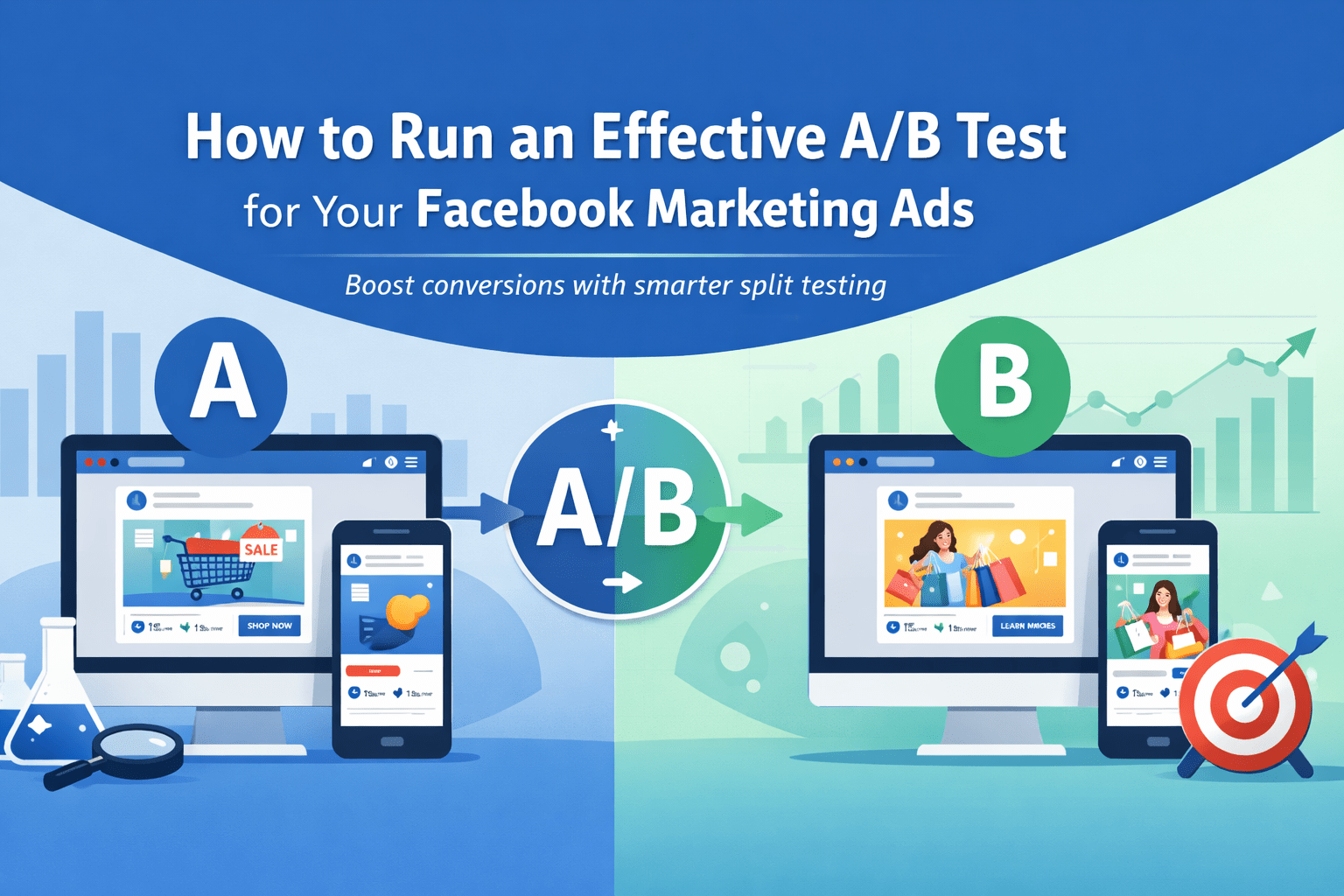

How to Run an Effective A/B Test for Your Facebook Marketing Ads
How to Run an Effective A/B Test for Your Facebook Marketing Ads
Facebook is one of the strongest platforms you can use to help promote your business. But that doesn’t mean just posting on an account and hoping for the best. You’ll have to actually use Facebook marketing, which is where Facebook ads come in. Getting these right can be difficult from the start.
You’ll already have a lot of competition, and they’ll be trying to grab the attention of the same customers as time goes on. Making sure your Facebook ads are actually effective is a priority. But that’s difficult to figure out. If you’re not skilled in marketing, it might feel a little overwhelming.
It doesn’t need to be. A/B testing your ads helps you refine them as time goes on, bringing in better and better results as time goes on. Let’s take a look at what Facebook ads are, how you can A/B test them, and why.
What is Facebook Marketing?
Facebook marketing means using Facebook to advertise your business and bring in new customers. This involves both organic marketing, which means posting quality content regularly and engaging with your followers, and Facebook Ads, which you’ll need to pay for.
With billions of daily active users, Facebook gives businesses a massive audience and sophisticated tools to reach exactly the people likely to be interested in what they offer.
Then there are Facebook ads. This is when you pay for your content to be promoted on Facebook. While there are several options for this, the main ways this is done is by either paying for the Facebook page itself to be promoted, or to promote specific posts and updates.
What Are Facebook Ads?
Facebook ads are when you pay to promote your content on Facebook, letting you highlight your business, products, or services in an engaging way. Instead of relying on organic reach, which is often limited by an algorithm, Facebook ads let you turn up directly in front of your target market.
You’ll be paying to advertise directly to your target market to help bring in a sale, develop brand awareness, and generate more revenue as time goes on.
A/B Testing Your Facebook Ads: What to Do & Why
What is A/B Testing
A/B testing is the process of making relatively small changes to each of your ads and then comparing the results so you can figure out which one performs better. This usually means running two ads at the same time with a slight change between them, like a different image or CTA.
If they both have a different CTA, for example, this lets you figure out which one leads to more conversions, so you can implement that specific CTA across other ads. You can test any part of your ads against each other, and even run multiple ads at once if you want to test several different versions.
But, keeping this to two or three ads keeps your A/B tests manageable and more efficient.
How to A/B Test Your Facebook Ads
A/B testing seems overwhelming if you haven’t done it before, but it doesn’t have to be. It’s just a matter of taking a structured approach to make sure everything’s done right. Following the right steps is a key part of this:
- Decide What You’re Testing – A/B testing involves measuring variables against each other, so you’ll have to pick a variable to test. Starting off with the image included with your ad before moving on to the headline, CTA, and similar essentials is recommended.
- Set Up (Almost) Identical Ads – Next is setting up ads campaigns for your ads. Have one for the original version, and another with the variable you’ve changed. Outside of the change you made to A/B test, keep everything else identical so the results are reliable.
- Start Testing – Now you’ll need to roll out the ads. Facebook has plenty of features to help with this, and you can even automate parts of the process. Manual testing could be recommended, though, as it helps make sure no other variables change during the process.
- Give it Enough Time – Once the ads have started, you’ll need to give them enough time to actually generate results. Don’t stop too early. This could end up meaning your results are inconclusive, so you mightn’t learn as much as you would’ve liked.
- Measure the Right Metrics – Measuring results is vital for A/B testing, but don’t just focus on all of the metrics. Focus on the ones that actually matter for your campaign. If you’re focusing on brand awareness, for example, impressions will be a key metric to check.
- Analyse and Apply the Results – Once your A/B test is done running, you’ll need to analyse the results. Focus on what provided consistent results and then A/B test this against another version to keep making improvements.
A/B testing helps you keep improving your Facebook ads as time goes on, and you can even use it on your other marketing channels, too. Invest in it from the start so you’ll see better and better marketing results in time.
Measuring the Success of Your A/B Testing
You’ll need to measure how successful your ads are when you’re testing them, and then compare the results of each of these tests. It’ll be essential for figuring out what’s actually effective and what’ll work for you going forward.
Metrics are a key part of this, and there’ll be plenty of these you could pay attention to. But, some metrics could matter more than others, like:
- Reach and Impressions – The number of people who see your content.
- Engagement – The amount of shares, likes, comments, and click-throughs.
- Conversions – Sign-ups, purchases, and downloads made through your content.
- Return on Ad Spend – The revenue you generate compared to ad investment.
Depending on what the goals of your Facebook ads campaign is, you could focus on some of these metrics more than others. Know which ones are your priority and test your ads accordingly.
Parts of Your Facebook Ads Campaign to Focus on
1. Defined Goals & Audience
Before starting off with Facebook ads, you’ll need to figure out what you want to get out of it. If you don’t know what you want, you’re not going to see any success. Make this one of the first areas you focus on. You can define your goals across several areas, like:
- Awareness – Getting your brand in front of more people.
- Consideration – Driving traffic to your website or page engagement.
- Conversions – Generating sales, sign-ups, and app installations, for example.
These goals help to shape the type of campaign you should run and how success can be measured.
Then there’s picking the right audience. If you’re targeting people you aren’t likely to buy from you at any point, there’s no point in paying to have your content in front of them.
2. Compelling Content
With paid marketing campaigns, you’ll need to create content that captures attention and persuades potential customers to actually do business with you. Creating the right kind of content and appropriate messaging are the best ways of doing this.
High-quality visuals and short videos get more engagement, while strong copy and a clear CTA leads to sales. Short, eye-catching content combined with relevant messaging increases the chances your audience will stop scrolling and actually engage with your content.
3. The Right Ads Format
You can go for several types of ads you can run on Facebook, and these’ll offer their pros and cons. Go with the right one based on what your goals are and what’ll help with your messaging and other areas.
You can go for:
- Image and Video Ads – Great for telling your brand story or showcasing your products.
- Carousel Ads – Allow multiple images or videos in one ad.
- Lead Ads – Collect contact information directly on Facebook without a lot of time or effort.
- Collection Ads – Let users browse your products without leaving the app.
These all have strengths and weaknesses, so they could be better for specific types of ad campaigns than others. Figure out what could work best for you and go for it.
4. Testing & Optimisation
A big part of Facebook marketing success comes from testing and continually improving your campaigns. This can be done in several ways, with a blend of each being a great strategy for constant improvement. They include:
- Try different ad creatives.
- Use multiple audience segments.
- A/B test headings, visuals, and calls-to-action.
Tracking performance metrics like click-through rates, engagement rates, and conversions helps you understand what’s working, and what isn’t, so you can adjust your strategy.
Final Thoughts
Facebook marketing is still one of the more popular ways to advertise a business, but that doesn’t mean you can just pay for a few ads and hope for the best. You’ll have to take a smart, strategic approach, especially when you’re investing in Facebook Ads.
You’ll want to make sure you see a return on investment and start driving sales and success in time. You could need to run an A/B test on your ads to figure out how you can improve. If you haven’t been seeing amazing results so far, then it’s worth putting the time and effort into it.
You’ll see more Facebook marketing success because of it.