


What Are Referring Domains? A Complete Guide for 2026
What Are Referring Domains? A Complete Guide for 2026
If you want Google to take your site seriously, you need other sites to vouch for it. That vote of confidence shows up as links. The moment one website links to yours, it becomes a referring domain.
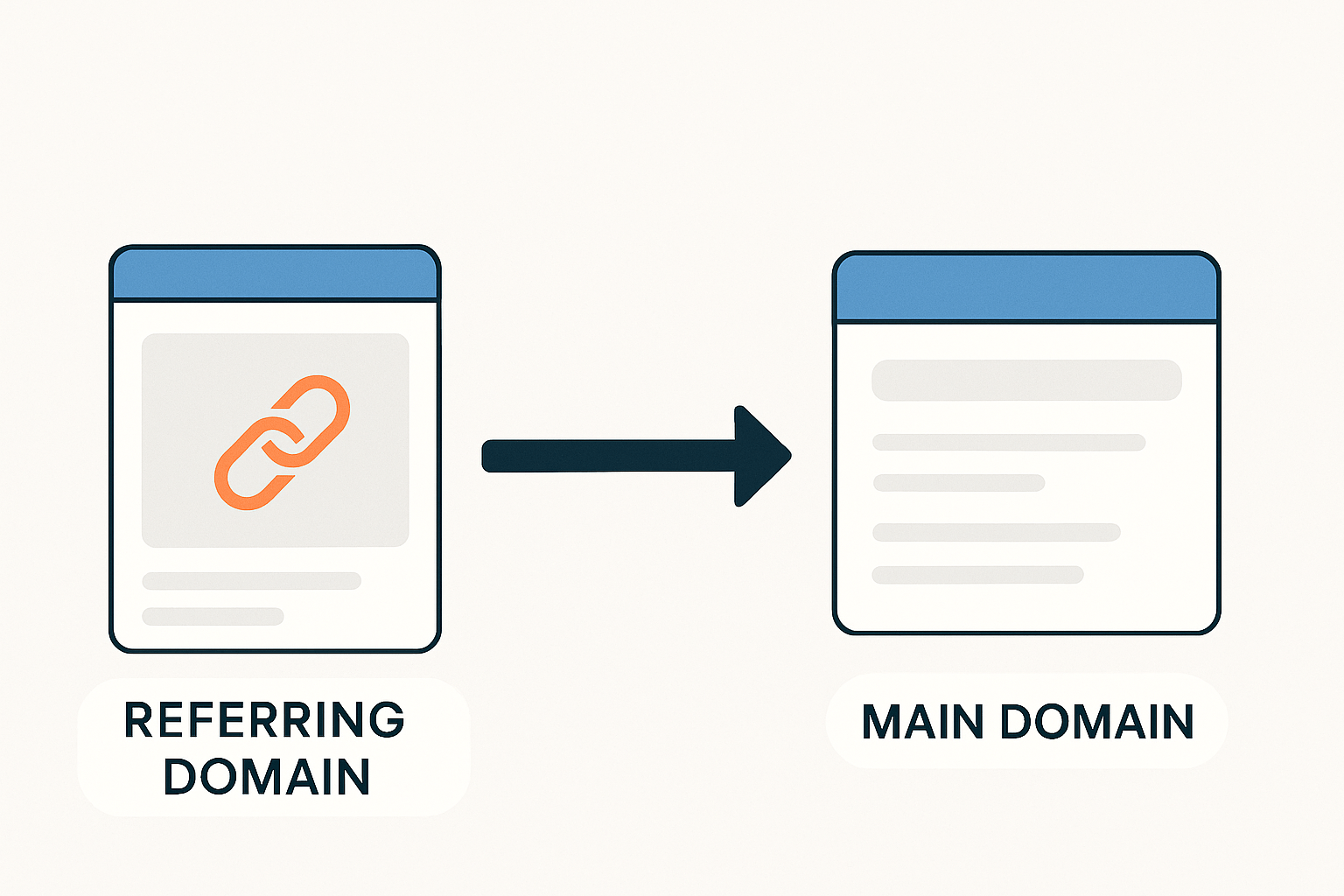
Plenty of people use the words backlink and referring domain as if they are the same thing. They are not. A backlink is a single link. A referring domain is the website that sent that link. One domain can send one link, or a thousand, across many pages.
Getting that distinction right changes how you set goals, measure progress, and prioritise outreach. It also keeps you from chasing inflated link totals that move the needle far less than you expect.
What are referring domains?
A referring domain is any external site that links to your page or website. If the New Zealand Herald links to your guide on climate risk, nzherald.co.nz is a referring domain for you. If a local club includes you on its sponsor page, that club’s site is a referring domain too.
Referring domains are counted once per unique site, no matter how many backlinks arrive from that site. That single number captures the breadth of support across the web in a way raw backlink totals cannot.
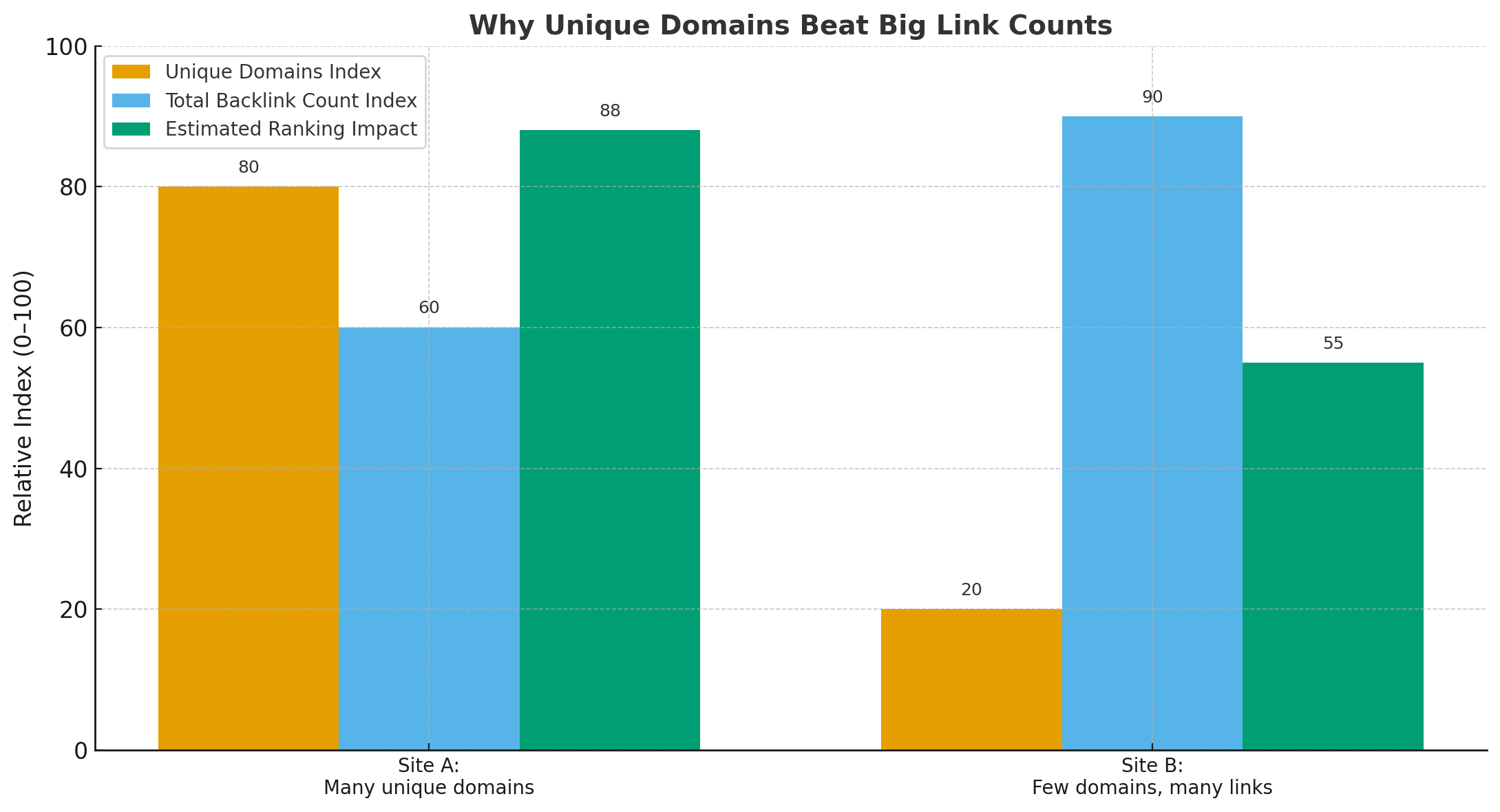
Search engines treat diverse endorsements as a strong signal of trust. A hundred links from one domain look like one fan cheering very loudly. A hundred links from a hundred different domains feel like a stadium.
Referring domains vs backlinks: the clean distinction
The gap between these two concepts shows up in reporting dashboards and in outcomes. Here is a simple way to keep them straight.
| Term | What it is | Why it matters | Example |
|---|---|---|---|
| Backlink | A single hyperlink from one page to another | Indicates a specific citation or mention | One link from a blog post to your product page |
| Referring domain | The unique website that sends backlinks | Captures breadth of support across sites | Ten different sites each linking once |
| Backlink profile | The full set of inbound links and their sources | Helps audit quality, growth, and risk | All links and domains pointing to your site |
SEOs often separate KPIs into two lines on the same chart: total backlinks and total referring domains. When rankings improve, the second line tends to tell the better story.
Why unique domains beat big link counts
Pages that rank well are rarely propped up by a few superfans. They are backed by many independent websites. Analysts often find that pages in the top spots attract several times more unique referring domains than those further down the page.
The logic tracks with common sense. Independent sites link for their own reasons. If lots of them cite your work, your content probably answers the question better, fresher, or more completely than the alternatives. That is the sort of signal algorithms reward.
If you need a quick rule of thumb, use this: one link each from 100 different sites tends to be far more valuable than 100 links from one site.
Quality always wins
Raw counts help, but quality carries disproportionate weight. A link from an authoritative, relevant website passes more trust than dozens from thin, off-topic blogs.
Authority can be estimated through third-party metrics like Domain Authority, Domain Rating, or Authority Score. Relevance is simpler. If you run an Auckland fintech startup, links from credible finance, tech, and New Zealand business publications are gold. Links from unrelated recipe blogs are not.
Avoid noisy tactics that spray links from low-quality directories or hacked forums. At best they do nothing. At worst they trigger a spam signal that drags your site down.
How to find who links to you
Referring domain data lives in SEO tools and in Google’s own reports. Each platform has its own scoring and filters, but the core job is the same: list linking domains, show changes over time, and help you judge quality.
Below are widely used options that make this practical day to day.
- Ahrefs: Site Explorer lists referring domains with filters for link type and page traffic. Alerts notify you when you gain or lose links.
- SEMrush: Backlink Analytics includes a Referring Domains report and a toxicity audit to flag risky sources.
- Moz: Link Explorer surfaces linking root domains and uses Domain Authority for strength estimates.
- Majestic: Trust Flow and Citation Flow highlight quality vs volume within a domain’s backlink graph.
- Google Search Console: The Links report lists top linking sites at no cost and is a solid baseline.
If you are starting from scratch, begin with Search Console to get a feel for the data, then validate and expand with one paid tool that fits your workflow.
Metrics that separate strong domains from weak ones
Not all referrals help equally. A quick triage saves time and keeps your outreach focused.
- Authority metrics across tools
- Topic match and contextual relevance
- Natural anchor text mix
- Editorial placement in main content
- Trust signals vs spam flags
- Consistent traffic from the linking site
- Growth trend of links over time
Two minutes on each domain is often enough to spot patterns. A clean domain with topical alignment and real traffic is worth pursuing. A domain stuffed with casino links and spun articles is not.
Competitor intelligence from referring domains
Your competitors are a shortcut to your next hundred domains. If a high-quality site links to several rivals, it has already shown willingness to reference content in your niche. That is a warm lead.
Run a link gap report to surface domains that link to your competitors but not to you. Sort by authority or traffic, then click through to see the exact page and context. If it is a resource list, propose your best guide. If it is news coverage, pitch a fresh angle or data point. If it is a guest article, suggest a topic their audience will value.
The same method works for local opportunities. A Wellington business directory that lists competing firms is likely open to listing yours. Industry associations, chambers of commerce, meetups, and universities all publish pages with relevant outbound links.
A simple habit closes the loop. Set alerts on top competitor pages so you get notified when they win new links. Reach out while the topic is still hot and the editors are still engaged.
Smart ways to grow your referring domain count
Editorial links tend to follow useful assets and timely stories. Create content that people genuinely want to cite, then give it a nudge.
One approach is to build reference hubs. Think definitive how-to guides, data-backed industry reports, interactive calculators, or open spreadsheets that others can embed. Another is to run a small study with a clear, newsworthy finding. Journalists and bloggers need credible stats, and they will often link to the source.
Public relations still works online, especially in New Zealand’s tight-knit media scene. If you have something of public interest, pitch it to the right reporter with a crisp subject line, the key point upfront, and an easy link to the full details.
Partnerships help as well. Sponsor a community initiative, contribute to a university panel, or share expert commentary with a trade publication. These create natural citations on reputable domains.
Keep the rubbish out
Every link profile accumulates noise. Scraper sites copy content. Spammy directories pop up and vanish. Negative SEO is rare, but it exists.
A monthly audit keeps things tidy. Sort by newest referring domains. Skim for clusters of foreign-language forums, auto-generated pages, or irrelevant adult and casino links. If you find a pattern, try to remove the links at the source or block the crawler. If the problem persists or risks a manual action, prepare a disavow file in Google Search Console so the algorithm ignores those referrals.
Do not overuse disavow. Use it when you see a clear pattern of toxic links you cannot clean up directly.
Prioritise referring domains for outreach
You will never pitch everyone at once, so choose wisely. A simple two-step filter helps:
Start with relevance. If the audience and topic fit tightly, keep it. If not, drop it. Then sort by authority and real traffic. Domains that combine both become Tier 1 prospects.
To keep your list focused, score each candidate across three axes:
- Relevance to your niche
- Authority and trust
- Relationship potential or path to contact
Anything that scores high on all three deserves a personalised pitch. Medium scores can be batched with a lighter touch. Low scores fall off the list.
Monitoring cadence and operating rhythm
Referring domains are not a set-and-forget metric. Build a small operating rhythm around them so gains stick.
Weekly, glance at new and lost referring domains and skim the contexts that drove them. If a blog cited your tutorial, update that tutorial while the attention is fresh. If a valuable link dropped because the target page was moved, ask for a fix or provide a replacement URL.
Monthly, review your gap to key competitors. Note which content types earned the most new domains, then plan two or three assets that mirror that success without copying it. If local links are thin, earmark time to pitch regional outlets.
Quarterly, tidy the bottom of your profile. Disavow only where a clear spam cluster exists. Refresh your prospect list with new serial linkers in your niche, and retire prospects that never respond.
Finally, bring the team along. A simple scoreboard helps everyone see cause and effect:
- Total referring domains this month vs last
- Number of new high-authority domains acquired
- Ratio of new referring domains to new backlinks
- Top three content pieces by new domains earned
- Number of toxic domains flagged and addressed
One sentence summary for the wall: breadth, quality, and relevance win.